
The Afronauts and Decolonial Ecology
To borrow from Jan Carew: last week was as magical as a roof of stars. Two of its highlights: being in London to attend the first try-out of The Afronauts and interviewing dr. Malcom Ferdinand. Here’s a 700-words note about ‘em.
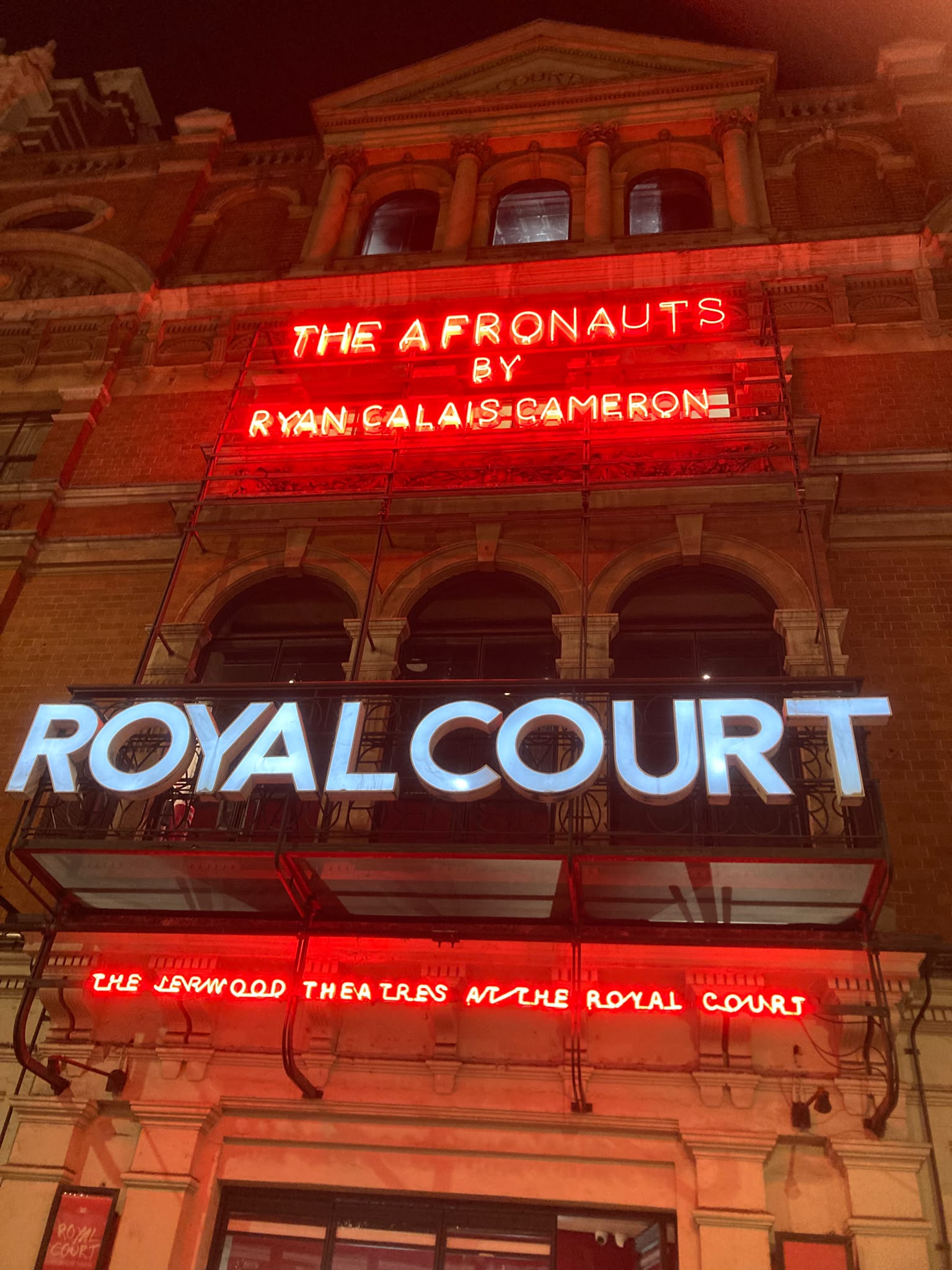
1. The Afronauts
The Afronauts, the play co-directed by Ryan Calais Cameron and Monique Touko, deserves a galaxy worth of 5-star reviews. Y’know how there’s the colour black… and then there’s a pigment named Mars Black? The imaginative, intellectual and artistic high The Afronauts left me on, makes me want to be a scientist. I would study science and become a paint manufacturer fo the sole purpose of cookin’ up an entirely new black pigment and naming it after this work. For me, The Afronauts is a Northstar in Black imagination.
With his witty, poetic, well-researched and exquisitely paced writing Ryan Calais Cameron underlines the dignity of the story of Edward Mukuka Nkoloso’s Zambian space program. Tenderly held by this dream ensemble of a cast, The Afronauts offers a most generous telling of what is described as a true-ish history. All eight characters in the piece are radiant and relatable. Their work, platonic, political and romantic relationships -including the ones we don’t see on stage- are all presented with so much care. Their drive is as solid as their doubts, their joyous togetherness is as honest as their fights.
What we absolutely shouldn’t take for granted is that neither their humour (and they are high-larious) nor their aimed-at-the-heart punches come with the colonial codes of “This is what makes an African story funny, mwua-ha-haaa!”
We left The Royal Court Theatre with full hearts, relaxed shoulders and unclenched fists.
Together with five darlings who work in theatres in Amsterdam and Rotterdam, I attended the first try-out on Saturday November 14. There are similarities in what we enjoy and differences in the professional lenses through which we witness. Our group consisted of playwrights, dramaturgs, mime artists, actors, choreographers and theatre makers. For some of us it’s the music that first catches our attention, others are instantly drawn to set design or lighting. Long story less long: the five of us arrived at the work from different positions. And, we all agreed: Every single aspect of this play stands out ànd lines up. It is sublime. The acting, casting, hair and makeup, lights, costumes, video design, music… Lush. Even the foyer and the front of the building were in style. We all left the Royal Court Theatre feeling the joy of having our artistic senses fully catered to.
Dancehall airhorns to the entire cast and crew who created The Afronauts. Click here for the full list of credits.
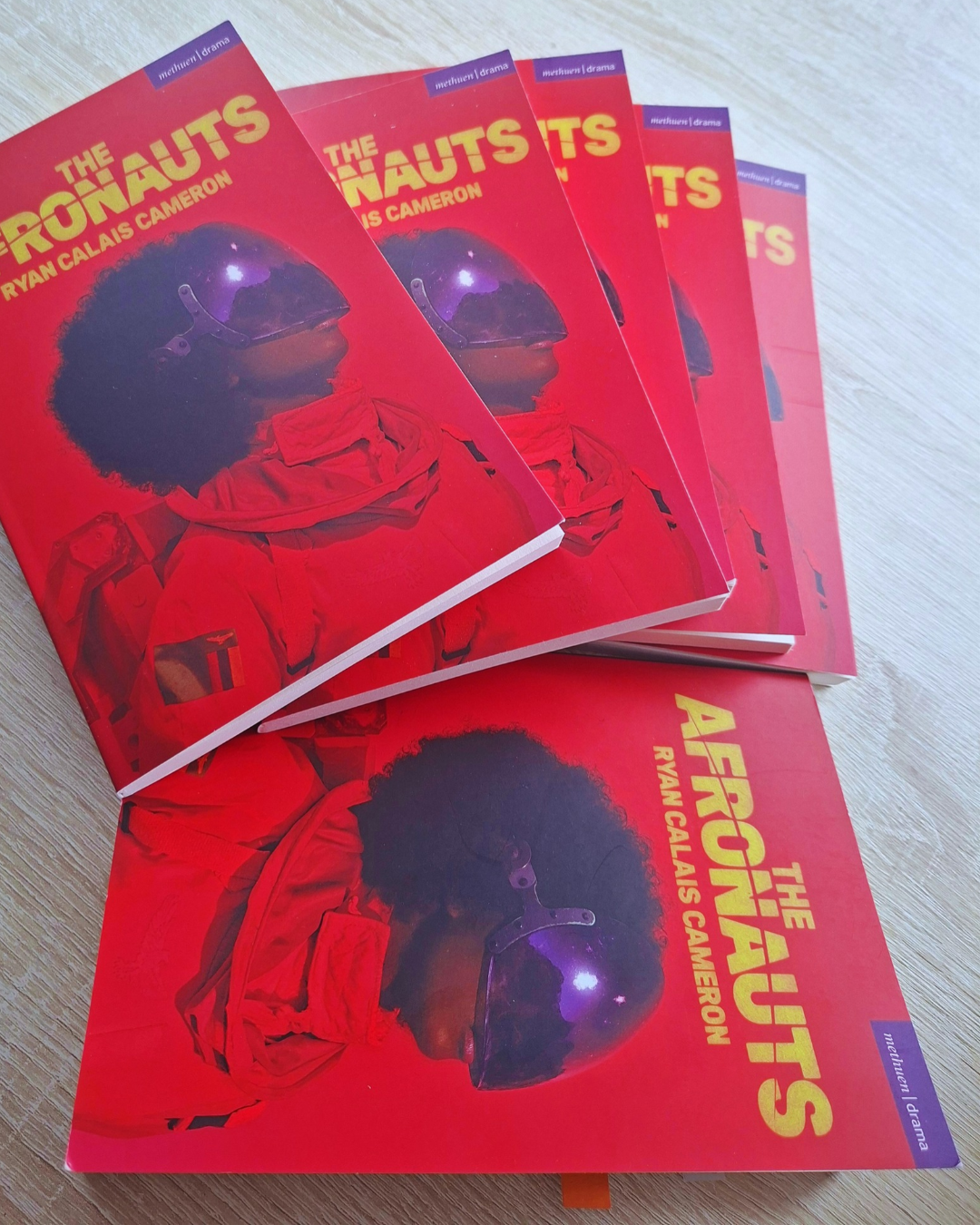
To further illustrate how much I love it: During the break I bought four copies of the script. After the play, I bought three more because I kept coming up with more people I wanted to gift it to. (For those who’re counting: see how one is already no longer in the stack?) If I also bought a ticket to go see it again? Of course.
— Note for my colleagues in the Netherlands’ theatre world —
The Afronauts must come to NL. While trying to make that happen, I hope many artistic directors and theatre programmers will make their way to the Royal Court Theatre to go see it. The same goes for the people in charge of granting subsidies/grants to theatre makers and playwrights in the Netherlands. The Afronauts and how its audience reacts to it should be a fundamental reference in your further considerations of who wants to see what.
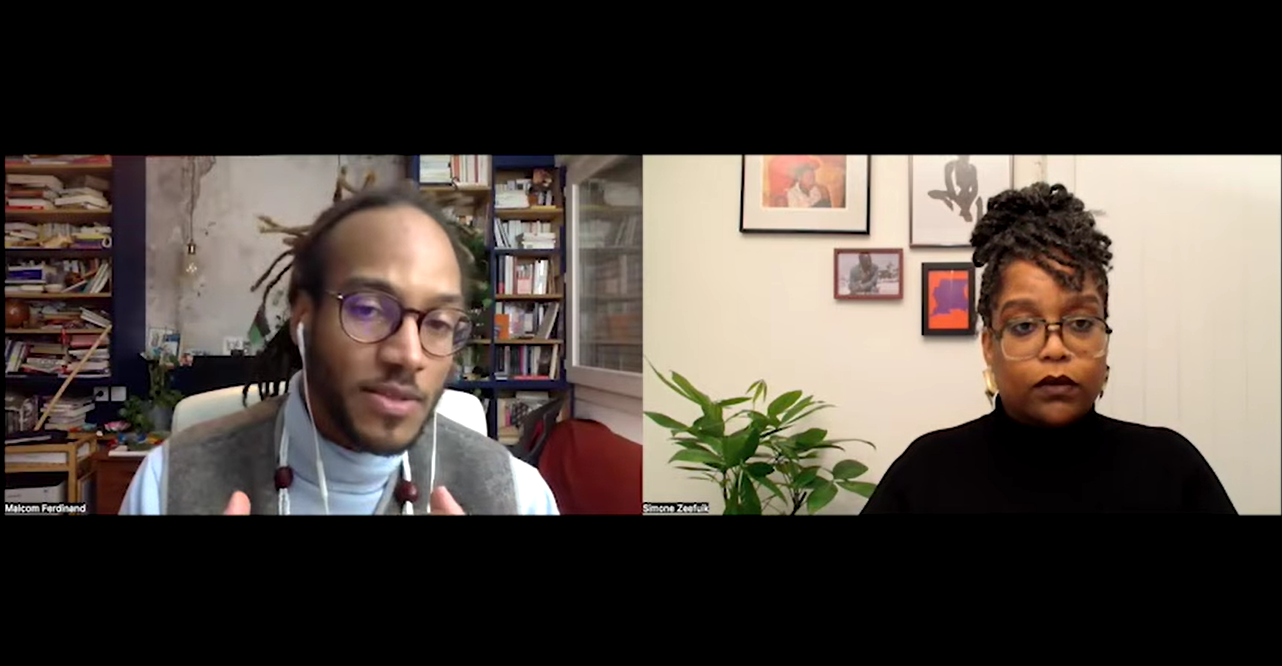
2. Een Groter Gesprek with dr. Malcom Ferdinand.
Dr. Ferdinand’s book ‘Decolonial Ecology: Thinking from the Caribbean World’ is a razor-sharp, literary lighthouse of a book. This publication, which is currently being translated in Dutch, is a work of encouraging care and redrawn horizons. Truly a must-read in a time when everything around us is either drowning or on fire.
On Wednesday November 11 I had the honour and pleasure to interview him about his work. Click here to watch the recording of our conversation.
Please note: the video will be online until December 20.
More info about this conversation can be found here.
— Book store note —
If you’re based in the Netherlands, be sure to always check if local, independent bookstores like Bijlmer Bookstore, The Base Bookspace and Savannah Bay sell what you’re looking for. For children’s books that match your interests and imaginations, also check EduCulture.

Theaterkrant: Joy Wielkens, Dennis Vanderbroeck and research piece
What a joy to write for Theaterkrant.nl, the Netherlands’ leading theatre platform. In the past weeks I wrote about how Afro-Dutch audiences experience NL’s theatre world, Joy Wielken’s debut on London’s West End and the gorgeous spatial designs of Dennis Vanderbroek, the initiator of Studio DennisVanderbroeck. For those of you who can read Dutch: I posted some notes and links below.
“Dennis Vanderbroeck, punt. Als zijn verbeelding, kennis en referentiekaders één fysieke plek zouden zijn, zou ik erin willen wonen. Ver voorbij de letterlijkheid van wat er verteld wordt, weet Vanderbroeck de hartslag van een verhaal op de meest beeldschone manieren te verbeelden.”
– link naar het artikel.
“In Hadestown wordt zij in het lied Livin’ It Updoor het personage Hermes aangekondigd met: ‘Here she comes!’ En met deze woorden opende het Britse Hadestown-team op
10 december 2025 hun Instagrambericht waarmee ze benadrukten wat the real oneshier al wisten: Joy Wielkens is een wereldster. In de Nederlandse theaterwereld: zeker. Maar, om de woorden waarmee Persephone Hermes riposteert iets te remixen: ‘She’s an outdoor girl’. @HadestownUK maakte bekend dat ‘outdoor’ in Joys geval Londen was. West End, om precies te zijn.”
– link naar het artikel.
“Tijdens de jaarlijkse Anton de Komlezing herhaalde professor Guno Jones in zijn slotwoord de wens van spreker drs. Helmut Gezius: rust. Rust als cruciaal onderdeel van herstel. Rust voor de personen wier dagelijkse levens structureel verstoord worden door colonial mentalities. Benieuwd naar hoe de Nederlandse theaterwereld zo’n rustplek kan worden, startte ik m’n onderzoek naar de theaterbelevingen van Afro-Nederlanders. Mr. dr. Nawal Mustafa, Sue-Ann Bel, Rita Ouédraogo en Sheralynn Adriaansz, vier kunstliefhebbers die even kritisch als hoopvol zijn, waren deel van de eerste groep ondervraagden. Spoiler alert: Het hoogste cijfer is een 7.”
– link naar het artikel
Een Groter Verhaal – new play with Romana Vrede
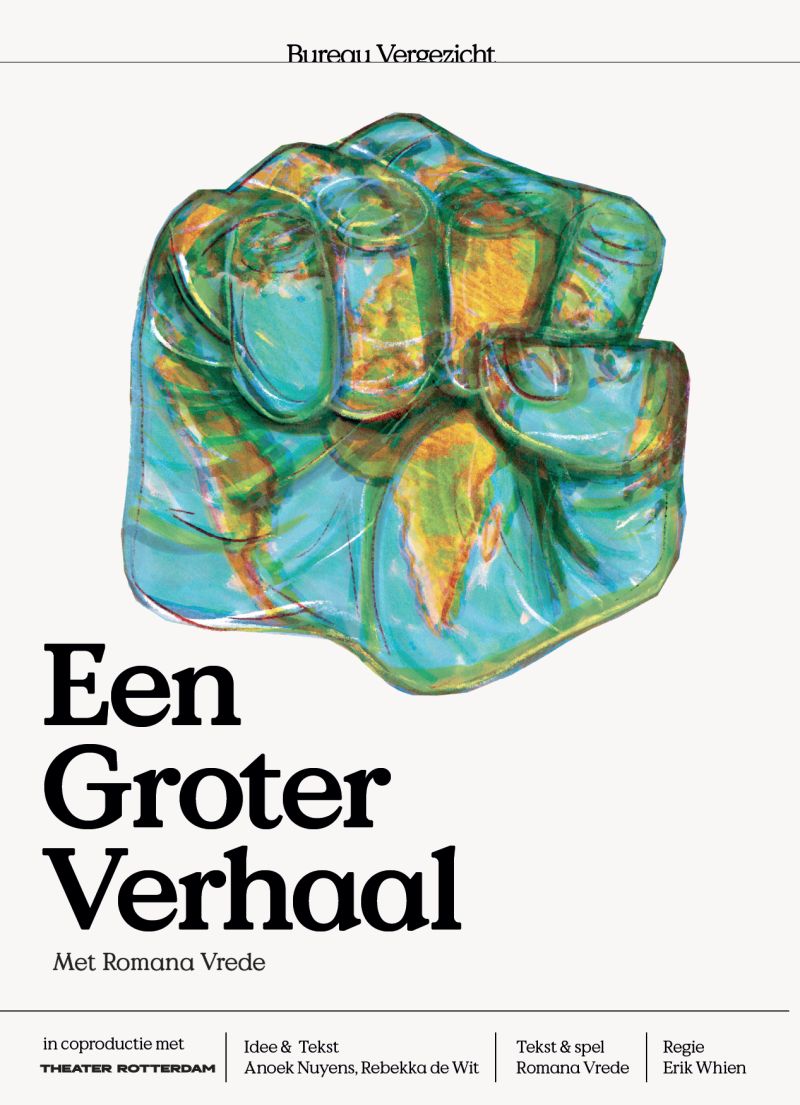
The play Een Groter Verhaal (A Bigger Story) offers a great addition to the Dutch theatrical landscape. I’m looking forward to how Romana Vrede’s solo performance will amplify various decolonial perspectives on how we inhabit and relate to the Earth. And, what this means in terms of how we understand ‘the world’. The play is set in a visually lush stage design by Studio Dennis Vanderbroeck and directed by our beloved Erik Whien. Romana’s monologue, which she co-wrote with Anoek Nuyens and Rebekka de Wit of Bureau Vergezicht, discusses the current horrors of a centuries old colonial mindstate. Its focus is on the exploitation of natural resources, the mistreatment of animals, who we consider to be part of ‘the world’ and how certain forms of modernity come with a bloodthirst for excess. Brought in that signature Vrede fashion which we love. And study. And long for because it’s such a beautiful, consistent form of craftpersonship. With its samples of sweet family stories and some good 80s UK pop music, it’s definitely worth your 75 minutes.
As part of the theatre tour Bureau Vergezicht will co-host a series of on- and offline programs about the literature and ideas that inspired the script for Een Groter Verhaal. On Wednesday November 11, from 20.45h-21.45h I have the honour and pleasure to interview civil and environmental engineer Malcom Ferdinand. Read more about our online conversation here.
Een Groter Verhaal is co-produced by Bureau Vergezicht and Theater Rotterdam.


You must be logged in to post a comment.