Category Archives: Afri-/Afrodiasporic communities in the Netherlands
Eternal reflections on getting free
(Written for the Amsterdam edition of the Trans//Form event. Their last edition will take place on Wednesday October 31 in Leeuwarden.)
I’m not saying she’s a golddigger but Amsterdam ain’t messing with the people who’re being priced right out of their homes, stores and neighbourhoods because gentrification rules everything around me. This city was built on and continues to exist by the grace of exploitation. This right here is the concrete version of unknockable hustles, miseducations and champion sounds. Amsterdam loves to market itself as the seat of Dutch tolerance and progressiveness but me, personally… how progressive is a city that prides itself on being multicultural but has never had a mayor that wasn’t white? If the idea of Amsterdam being run by a left-wing, Black Muslim woman has sweat trickeling down your cheeks and your heartbeat sounding like Sasquatch feet, your ideas of progressiveness aren’t as radical as you hope they were.
When our host JNM, Tim Blaauw and Elten Kiene asked me to write something about Hip-hop and Transforming Amsterdam, the first question that came to mind was this:
How could rap politically impact and reshape the city of Amsterdam? How can this culture rooted in craft not just respect the architects but also push forward new shapeshifters and other folks who don’t just survive but also predict these moments when, as Lauryn Hill once put it, seasons change and mad things rearrange?
 Don’t get me wrong, I loved singing along to tracks about killah’s and hundred dollar billah’s or the many variations of living better now/ Coogi sweaters now…
but most of the songs I really loved were the ones that painted realities that were truer for more people.
So what if Hip-hop would help us shift the focus from the richest to the brokest?
Long before my highschool teachers who taught history, economy, geography and social studies classes talked about resistance movements, the power of mobilization plus Black folks and non-Black People of Colour’s many, many, many reasons to say “F*ck the Police”, Hip-hop already schooled me on these matter. Through rap music I was also introduced to pan-Africanism, RBG and Islam. MC’s like Queen Latifah, miss Hill, The Mighty Mos, Talib Kweli, Rakim, Jeru the Damaja, Nas or collectives like The Native Tongues and Wu Tang Clan navigated me towards books, films and icons that sparked my interests in facts that, to this very day, help me to understand, or at least unpack, the inequalities that, be it in different forms in different cities in different countries, still shape the worlds around us.
I wonder how Dutch Hip-hop would have shaped my teenage views of this city, perhaps of this entire country, if there had been more MC’s who spoke about how these canals and the fancy houses that overlook them were financed with money generated from slavery and colonialism. There was a time when the city of Amsterdam owned parts of Suriname. There was a time when artists sculpted the faces of Black people and hung them on people’s houses to illustrate a wealth created by deep, deep investments in slavery. If you take one of the Black Heritage Tours, you’ll see dozens of these faces of Black people used as decoration.
I never DJ so I never engaged in digging the crates but I am digging through these museum archives and every time I come up for air, my mind is stretched around more stories of our presence in this city, this country, this continent. I hope that one day we’ll wrap more of this knowledge around some amazing beats so our next generations won’t have to look so far to find themselves.
Again, not saying that every MC or Hip-hop collective in the Netherlands should be like Pink Oculus, Zwart Licht, Rasheed (formerly known as LQ), Maikal X, Typhoon, Winne, Vieira or the Pan-Afrikanz. I’m not saying there’s absolutely no room for MC’s who limit their topics to money and women…and maybe some more money. What I am saying is that I wonder what our level of political intelligence and commitment to social justice would look like if more MC’s urged their listeners to reject the colonial knowledge that’s being spread in schools and museums. What would Amsterdam’s city council look like if MC’s mobilized their listeners to vote? Or strike? Or squat buildings? Or organize surveillances to keep right-wing terrorists from spray-painting hate speech on our mosques?
What would this city look like if Hip-hop would be one of the tools we use to get people to sign petitions? Or show up for demonstrations? Or bring food to the improvised shelters that house undocumented, illegalized refugees? What could this city and cities like Rotterdam, Groningen, Tilburg, Utrecht, The Hague, Zwolle, Nijmegen… what would they look like if we, to quote The Honourable Sean Carter, got together like a choir, to acquire what we desire?
What if, like the Brooklyn painted by Biggie, Amsterdam would be sketched with more layers, more truths? What if we had more MC’s that sound like they actually read books, study speeches, watch the news and are invested in spreading knowledge? What if, after our 2021 elections, we’d actually have Black politicians in the Tweede Kamer? What would a diss track about RTL Late Night’s Twan Huys sound like? I remember the first time I heard Common rapping about Assata Shakur. Who’ll write an entire track to salute Sylvana Simons, Gloria Wekker or Ugbaad Kilincci? Who’ll record their video in The Black Archives, Bijlmer Parktheater or our yet-to-be-build Slavery Museum? Who’ll write a song about how Johan Cruyff wasn’t Amsterdam’s best soccer player at all and why the Bijlmer Arena should have been named after Clarence Seedorf? What if more MC’s would threat our liberation like their thesis and bless us with some well written verses broken down into pieces?
Long story short: What if NL-based Hip-hop would be our tool to, as Dead Prez once put it, get free?
Friday Oct. 5 – Black Magic Woman event
From the best hashtags for the most needed social justice campaigns to looking like we invented every single colour, from writing books and articles about institutionalized anti-Blackness to bringing you the best Twitter threads with the deepest breakdowns and memes… we, as Black women, wrote our names all over your entire year. Life, even. Again. We are magic when taking over the theatres, universities, book charts, Youtube playlists and museums but best believe that we are equally magical when we rest, indulge in Self Care and/or say “No.” There’s magic in our work but, and this is perhaps more important, there’s work behind our magic. It’s more than ‘talent’ and ‘having a nose for it’… it’s expertise. It’s not a ‘head start in the race to be cool’, it’s a deep-rooted (self)love for that what makes us us and loving it before the mainstream catches on. We must praise each other more. Not just when they see us but long before that. Not just when what we do shows up on that generalized radar of acknowledgements. Waaay before that. At the root, from the moment we see ourselves and, but also in, each other.
With that in mind, my dear colleague Bahghi Yemane and I turned our “More celebrations!”-resolution into a program: the Black Magic Woman intro event. Black Magic Woman is an annual festival that started in 1995 and it was as great as the title predicts. The last few years it slimmed down significantly, some years not even taking place at all. It has been one of my long-time dreams to bring it back in a way that matches the memories that, with regards to events, hold a top position in the highlights of my late teens. I’m excited to report that I’ve been granted the honour of organizing the 2019-edition of the festival but that’s a lot of months from now and to hold back on celebrating Blackness… in this economy? I. Think. Not.
So, the festival-festival will take place in 2019 but on Friday October 5, we’re hosting a pre-event at Amsterdam’s Bijlmer Parktheater. There will be two panels:
Panel 1 (in Dutch) – Representation in film and fashion with panellists Grâce Ndjako, Janice Deul, Rowan Blijd and Tosca Vrede. Host: Bēylula Yosef. We’ll talk about:
– #BennieBeige, Rowan Blijd’s campaign that urged Dutch lingerie brands to rethink ‘nude’ as always being 11 shades of beige.
– #DiversityRules , Janice Deul’s platform that focuses on diversity with regards (but not limited) to magazine covers, fashion shows and advertisement.
– “Noire n’est pas mon métier” (Black is not my job), a movement where Black, French actresses protested against misogynoir and other forms of anti-Blackness in French cinema. Grâce Ndjako will give us a breakdown. The picture of above was taking during part of the protest.
– With Tosca Vrede, one of the Black Magic Girlz-coordinators we’ll talk about how all this impacts the lives and minds of Black, teenage girls.
Panel 2 (in English) – Representation in literature with panellists Sarah Ozo-Irabor (Books&Rhymes, (co-founder of Not Another Book podcast), Bēylula Yosef (co-initiator of Afrispectives) and Yomi Adegoke (co-author of Slay In Your Lane). Host: Marly Pierre-Louis.
During this panel we’ll discuss the recently released books and other bundles of stories that made us feel represented.
Wednesday, Bahghi and I will announce the third part of the program and we’ll do so on our Facebook event page. Please note that there’ll be a break between the 1st and the 2nd panel so people who don’t speak Dutch can also properly enter the room.
Basic event info
Date: Friday October 5
Time: From 20.00h until 22.00h.
Location: Bijlmer Parktheater (address: Anton de Komplein 240, 1102 DR Amsterdam)
Tickets: €5 and you can buy them here.
Hashtag: #BlackMagicWomanFest
#BlackVoteNL – 9 redenen om te stemmen
Info over hoe en waar je kunt stemmen, staat onderaan de lijst.
9 redenen om jouw stempas en ID-bewijs klaar te leggen voor de gemeenteraadsverkiezingen van woensdag 21 maart 2018 en om op een Zwart-Afrikaanse of Afri-Caribische politicus te stemmen:
1. Je bent nog steeds helemaal in de “Wakanda Forever!”-stemming maar ondertussen lijkt jouw gemeenteraad op die hele Get Out-schoonfamilie. Stem 21 maart omdat je niet wil dat jouw stad bestuurd wordt door politici die het geen probleem vinden dat de Zwarte gemeenschappen ondervertegenwoordigd zijn in de gemeenteraad en/of op hun eigen kandidatenlijst. “Ik ben dan misschien niet Zwart maar ik weet ook heel veel van racisme dus…/ I’m Black on the inside so…/ blabla.”
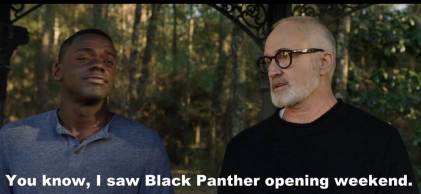
2. Je hebt een timeline vol Black Girl Magic maar hoeveel Zwarte vrouwen zitten er op dit moment, nu-nu in het bestuur van jouw stad?

Dat dus. Stem 21 maart voor de representatie van Zwarte vrouwen op bestuurlijk niveau.
3. In veel grote steden is de woningmarkt rommel. Voor velen van ons is het lastig om een betaalbare woning te vinden waarvoor je niet meer dan 10 jaar op een wachtlijst hoeft te staan. Of wil je naar Urk of Zwammerdam verhuizen? Stem woensdag 21 maart omdat je wil dat onze gemeenschappen vertegenwoordigd zijn bij gesprekken over huisvesting en gentrification.
4. Je spreekt graag over (soms zelf met de woorden van) Winnie Mandela, Assata Shakur, Kwame Nkrumah, Malcolm X, de Marronstrijders maar op de school in jouw buurt leren kinderen alleen iets over politieke leiders als Martin Luther King, Jr? En dan krijgen ze ook nog eens alleen de whitewashed versies? Stem woe. 21 maart als je wil dat mensen uit onze gemeenschappen meepraten over het dekoloniseren van het basis- en middelbaar onderwijs.
5. Over educatie gesproken… het lesmateriaal dat gebruikt wordt bij de Nederlandse lessen voor vluchtelingen, is veel te vaak echt rommel. “Ik heet Jan. Mijn vrouw heet Anne. Wij zijn getrouwd. Onze zoon heet Peter. Onze dochters heten Laura en Sara. Wij zijn een gezin. Onze hond loopt op straat. Wij eten om zes uur. Jij mag niet mee-eten” Stop hiermee. Daarnaast wordt in de boekjes (en dan ben ik echt gul dat ik ze zo noem want het zijn vaak ook gewoon slecht gekopieerde stencils) qua foto’s, tekeningen en verhaallijnen totaal geen representatief beeld geschetst van de aanwezigheid van Zwarte en niet-Zwarte Personen van Kleur in Nederland. Stem woe. 21 maart als je op bestuurlijk niveau een gesprek wil over het dekoloniseren en waardiger maken van de inburgeringscursussen.
6. Rechtse partijen vinden dat zwarte piet geen racisme is want “tradities kunnen niet racistisch zijn.” Rommel. Stem 21 maart op een linkse partij als je niet wil dat jouw stad bestuurd wordt door personen die niets begrijpen van de strijden die we al tientallen jaren voeren.
7. De gesprekken over het Slavernijmuseum worden ook op bestuurlijk niveau concreter. Een instituut waarbij de geschiedenissen en recente realiteiten van zowel de Afri-Caribische als de Zwart-Afrikaanse gemeenschappen in NL centraal staan, verdient dezelfde aandacht en betrokkenheid. Stem 21 maart op een linkse partij omdat een Slavernijmuseum en een Black Presence Institute absolute non-issues zijn voor een gemeenteraad vol rechtse partijen*.
8. Veel van de theaters, festivals, herdenkingen, vieringen, museums, etc. die we graag bezoeken of waar we graag aan deelnemen, zijn (deels) afhankelijk van gemeentesubsidies. Hoe denk je dat een Keti Koti herdenking en/of viering of festivals als In The Picture en Black Magic Woman eruit zullen zien wanneer een rechts gemeentebestuur besluit dat ze geen tijd meer voor ons hebben*. Stem woe. 21 maart als je geen zin hebt om €50 per theater-, festival- of museumbezoek te betalen.
9. Je bent moe van al die hipster-tentjes die onze restaurants, cafés en supermarkten verdringen. We hebben genoeg frappuchino-, frozen yoghurt- en macaroon tentjes nu. Stem 21 maart zodat de belangen van onze ondernemers behartigd worden en wij als wijkbewoners ons herkennen in het winkel-/restaurantaanbod in onze stadsdelen. Stem voordat de yupsters World of Food overnemen en ze al onze gerechten in een wrap proberen te duwen! Jollofwrap, stel je voor…
Stemsuggestie
Ik hoop dat m’n mensen die in Amsterdam mogen stemmen, stemmen op één van deze drie politici:
– Carla Kabamba van UCF/ Ubuntu Connected Front.
– Sylvana Simons van Bij1.
– Simion Blom van GroenLinks.
Let op: De volgorde van mijn suggesties is… 1. Ladies first 2. Alfabetische volgorde. Als jij je laat machtigen door twee mensen die niet gaan stemmen dan hoef je niet te kiezen; gun alledrie dan één stem.
Hoe stem je?

– Check hier waar in Amsterdam je kunt stemmen.
– “Ik woon niet in Amsterdam. Waar kan ik stemmen?” Google “stembureaus” + de naam van jouw stad/gemeente.
– Check hier hoe je kunt stemmen.
– Klik hier wanneer je zelf niet kan/wil stemmen maar iemand wil machtigen om voor jou te stemmen.
Bij alle reguliere stembureaus kun je tussen 07:30u en 21:00u stemmen.
Toevoeging bij delen van punten 7 en 8: * Ja, ik vind dat we hier als gemeenschappen hier meer in dienen te investeren. Ja, kijkend naar hoe Nederland aan haar welvaart komt, vind ik absoluut dat hier ook een smak overheidsgeld ingestoken dient te worden.
 laZeefuik
You must be logged in to post a comment.