The Afronauts and Decolonial Ecology
To borrow from Jan Carew: last week was as magical as a roof of stars. Two of its highlights: being in London to attend the first try-out of The Afronauts and interviewing dr. Malcom Ferdinand. Here’s a 700-words note about ‘em.
1. The Afronauts
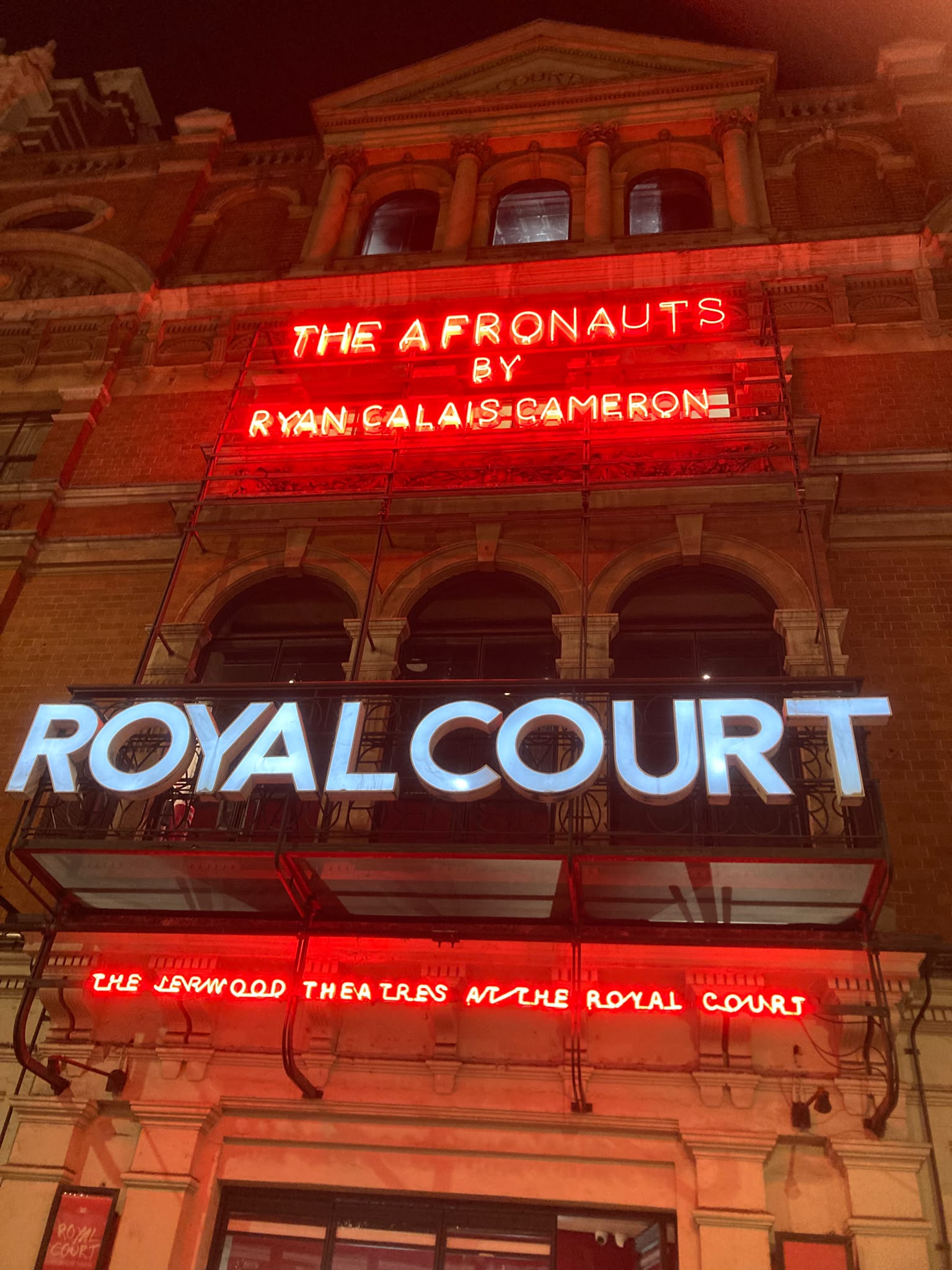
The Afronauts, the play co-directed by Ryan Calais Cameron and Monique Touko, deserves a galaxy worth of 5-star reviews. Y’know how there’s the colour black… and then there’s a pigment named Mars Black? The imaginative, intellectual and artistic high The Afronauts left me on, makes me want to be a scientist. I would study science and become a paint manufacturer fo the sole purpose of cookin’ up an entirely new black pigment and naming it after this work. For me, The Afronauts is a Northstar in Black imagination.
With his witty, poetic, well-researched and exquisitely paced writing Ryan Calais Cameron underlines the dignity of the story of Edward Mukuka Nkoloso’s Zambian space program. Tenderly held by this dream ensemble of a cast, The Afronauts offers a most generous telling of what is described as a true-ish history. All eight characters in the piece are radiant and relatable. Their work, platonic, political and romantic relationships -including the ones we don’t see on stage- are all presented with so much care. Their drive is as solid as their doubts, their joyous togetherness is as honest as their fights.
What we absolutely shouldn’t take for granted is that neither their humour (and they are high-larious) nor their aimed-at-the-heart punches come with the colonial codes of “This is what makes an African story funny, mwua-ha-haaa!”
We left The Royal Court Theatre with full hearts, relaxed shoulders and unclenched fists.
Together with five darlings who work in theatres in Amsterdam and Rotterdam, I attended the first try-out on Saturday November 14. There are similarities in what we enjoy and differences in the professional lenses through which we witness. Our group consisted of playwrights, dramaturgs, mime artists, actors, choreographers and theatre makers. For some of us it’s the music that first catches our attention, others are instantly drawn to set design or lighting. Long story less long: the five of us arrived at the work from different positions. And, we all agreed: Every single aspect of this play stands out ànd lines up. It is sublime. The acting, casting, hair and makeup, lights, costumes, video design, music… Lush. Even the foyer and the front of the building were in style. We all left the Royal Court Theatre feeling the joy of having our artistic senses fully catered to.
Dancehall airhorns to the entire cast and crew who created The Afronauts. Click here for the full list of credits.
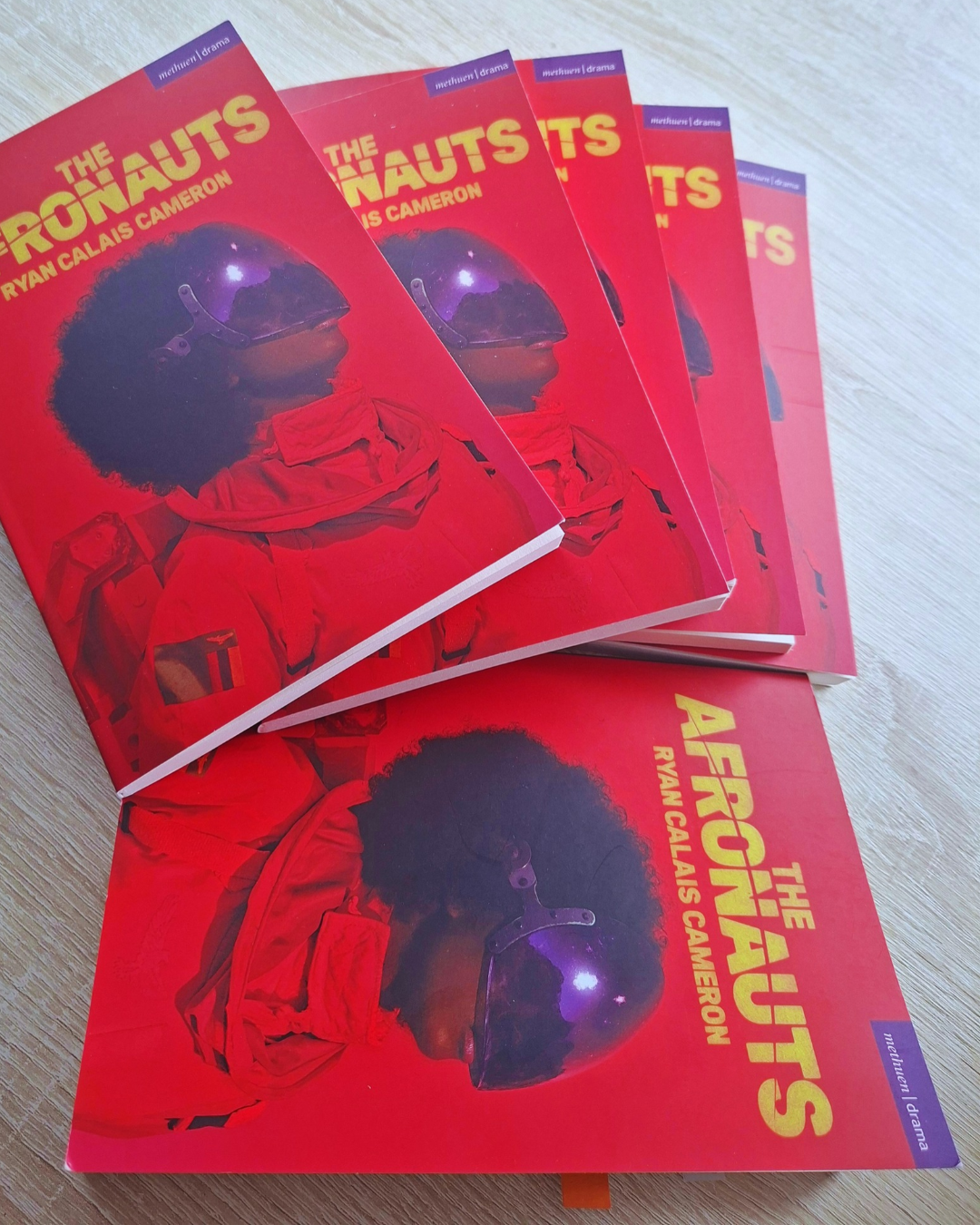
To further illustrate how much I love it: During the break I bought four copies of the script. After the play, I bought three more because I kept coming up with more people I wanted to gift it to. (For those who’re counting: see how one is already no longer in the stack?) If I also bought a ticket to go see it again? Of course.
— Note for my colleagues in the Netherlands’ theatre world —
The Afronauts must come to NL. While trying to make that happen, I hope many artistic directors and theatre programmers will make their way to the Royal Court Theatre to go see it. The same goes for the people in charge of granting subsidies/grants to theatre makers and playwrights in the Netherlands. The Afronauts and how its audience reacts to it should be a fundamental reference in your further considerations of who wants to see what.
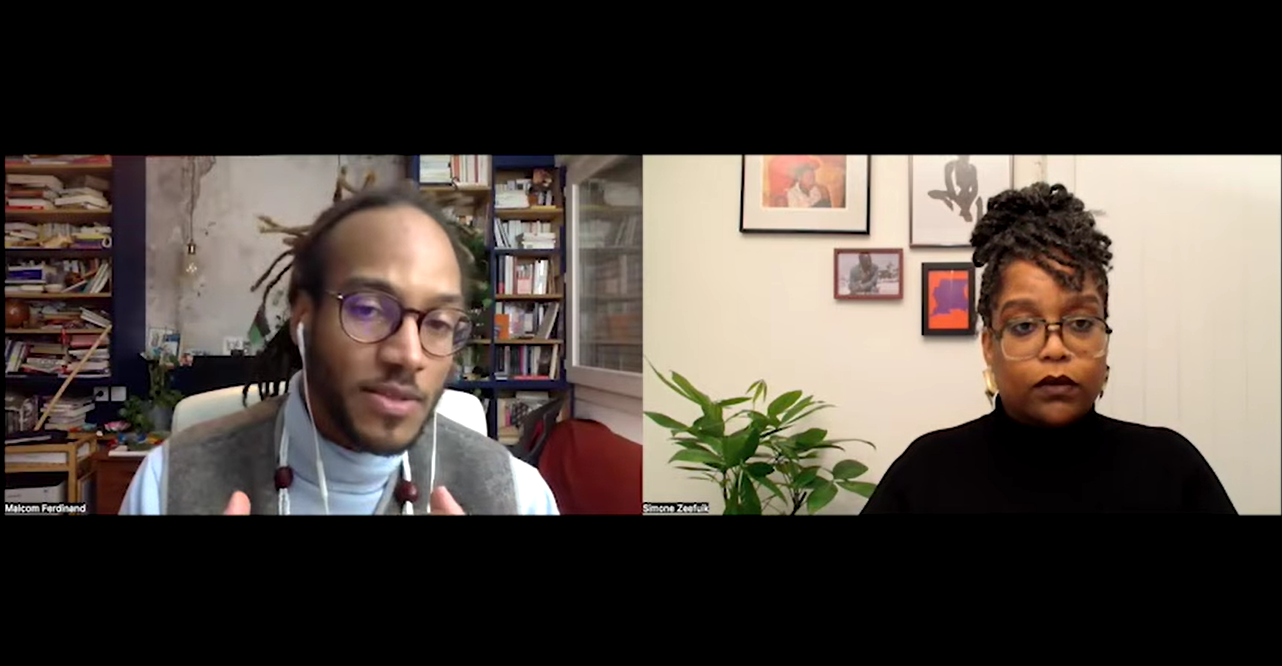
2. Een Groter Gesprek with dr. Malcom Ferdinand.
Dr. Ferdinand’s book ‘Decolonial Ecology: Thinking from the Caribbean World’ is a razor-sharp, literary lighthouse of a book. This publication, which is currently being translated in Dutch, is a work of encouraging care and redrawn horizons. Truly a must-read in a time when everything around us is either drowning or on fire.
On Wednesday November 11 I had the honour and pleasure to interview him about his work. Click here to watch the recording of our conversation.
Please note: the video will be online until December 20.
More info about this conversation can be found here.
— Book store note —
If you’re based in the Netherlands, be sure to always check if local, independent bookstores like Bijlmer Bookstore, The Base Bookspace and Savannah Bay sell what you’re looking for. For children’s books that match your interests and imaginations, also check EduCulture.

Posted on November 19, 2026, in Books, London, Theatre. Bookmark the permalink. Comments Off on The Afronauts and Decolonial Ecology.


You must be logged in to post a comment.